Showing posts with label Robotic trading systems. Show all posts

Canaccord Genuity portfolio strategist Martin Roberge believes another round of stimulus may be required for risky assets to move into a higher trading range.
The most likely source is the European Central Bank, as he noted that deflationary forces are mounting in the euro zone.
While the negative impact of harsh winter conditions has passed, the much-awaited economic rebound in Q2 may not be as strong as anticipated by many investors,” Mr. Roberge said in a research note.

He pointed out that forward-looking indicators suggest a softening of global economic momentum as the OECD LEI diffusion index dipped for a third month in a row to 65%.

Mr. Roberge also noted that momentum is waning in developed markets and balancing out in emerging-market economics, with recent data pointing to stabilization rather than acceleration in Q2.

But the strategist also noted that a move in the euro above US$1.40 appears to be a pre-requisite for the ECB to embark on a stimulus program.

Mr. Roberge suggested another potential catalyst to send stocks higher could be broader monetary reflation in emerging markets.

China has reduced reserve requirements for banks while at the same time putting through stimulus packages aimed at boosting spending on railways and other construction projects.

“Elsewhere, inflationary pressures could be at a tipping point,” the strategist said, adding that Canaccord’s inflation diffusion index for emerging markets is peaking. “A more visible improvement would likely signal the end of the monetary tightening cycle in several countries.”

Automated trading systems, in all its forms, is a rapidly growing trend in the financial markets. The liquidity added by automated trading helps the entire marketplace by making it more efficient for everyone. While we may never know what, if any role, an automated trading snafu played in the May 6th market flash crash, one thing is for certain: automated trading systems has changed the battlefield of electronic trading.  

Fill This Form To Get More Detailed Information


Investors have been wading through a flood of earnings over the last few weeks, but the focus turns back to the Federal Reserve and economic matters on the last day of the month.

The Federal Reserve wraps up a two-day policy meeting and issues a decision on interest rates at 2 p.m. ET. Investors have been monitoring its moves to reign in economic stimulus measures. The Fed is expected to reduce its asset purchases by another $10 billion.

U.S. stock futures were declining in advance of the opening bell.

Employment and economic growth is also on the agenda: ADP will release its monthly national employment report at 8:15 a.m. Then the Bureau of Economic Analysis will release its initial estimate of first quarter U.S. GDP at 8:30 a.m. ET.

Related: Fear & Greed Index

In corporate news, Time Warner (TWC, Fortune 500) and Hyatt Hotels (H) are among the companies reporting earnings before the opening bell. Weight Watchers (WTW) is reporting after the close.

Shares in Royal Dutch Shell (RDSA) are rising by about 4% in London trading after the oil giant reported better-than-expected quarterly results and hiked its dividend.

Takeover talk continues Wednesday, with shares in the French company Alstom (ALSMY) rallying by 8% in Europe after General Electric (GE, Fortune 500) bid $13.5 billion to take over the firm's power divisions. German firm Siemens (SI) may yet make a counter offer.

Shares of Twitter (TWTR) were falling by about 11% in premarket trading after the company posted uninspiring first quarter results.

Related: Five years later, TARP price tag hits $40 billion

U.S. stocks closed higher Tuesday. The Dow Jones industrial average and S&P 500 ended solidly higher, while the Nasdaq finished up 0.72%.

Over the course of April, the Nasdaq has declined by just over 2%. The S&P and Dow have eked out minor gains. 

If you are an active stock trader and facing loss from your stock trading or you are looking for risk free trading system  just use Robotic Stocks Trading System. This is fully robotic trading system which is very helpful for you. For more detailed information just visit our website once.  

FILL THIS FORM TO GET MORE DETAILED INFORMATION


http://roboticstockstrader.com/ 
The stock market slide in recent days, after the S&P 500’s 30%-plus surge last year, doesn’t represent the bursting of a bubble.

That’s crucial to consider, given the comparisons made by some pundits between the current market and that of March 2000, when tech stocks started evaporating.

Whatever else you might say about today’s stock market, it is nowhere near as overheated as it was 14 years ago. And that’s not a subjective view. My conclusion is derived from a data-driven focus on objective measures that were identified by the leading academic study of investor sentiment. That study, by Jeffrey Wurgler and Malcolm Baker, who are finance professors at New York University and Harvard Business School, respectively, was titled “Investor Sentiment in the Stock Market.”

The professors identified five indicators of investor sentiment that, over the past half century, were highly correlated with investors’ mood swings between the extremes of pessimism and exuberance.

Not surprisingly, the indicators showed a record level of investor optimism in March 2000. The picture they’re painting today is far different.

1. Volume of IPOs. There were 123 new issues in the first three months of 2000, according to University of Florida finance professor Jay Ritter. There were 58 in the same period this year, according to Ritter.

2. IPO returns. In 2000’s first quarter, the first-day return of the average initial public offering was an incredible 96%. During the first three months of 2014, it was 22%.

3. Dividend premium. The professors, in a study, focused on the relative valuations of two groups of stocks: those of established, dividend-paying companies versus those of more speculative firms. They theorized that, as exuberance reaches extreme levels, investors become bored by established, dividend-paying companies. In March 2000, speculative companies on average had a 43% higher valuation than the dividend-paying stocks. The comparable premium today for stocks in the S&P 1500 index is 26%, according to data from FactSet.

4. Share turnover. Over the first three months of 2000, NYSE-listed stocks’ turnover rate was an annualized 89%. For the first quarter of this year, it was 58%.

5. Share of corporate cash derived from equity issuance. Corporations increasingly turn to the equity markets to raise money during periods of speculative excess. The equity share stood at 20% for the first three months of 2000. The most recent data from Wurgler, covering three months in late 2013, showed the equity share was 11%.

The bottom line? None of the five sentiment indicators shows the market today to be as overheated as it was in March 2000.

To be sure, equities may be overvalued. And, in any case, the market is more than overdue for a 10% correction. But the bears go too far when they try to advance their argument by claiming that we’re in a bubble that is analogous to the one that occurred in March 2000. 


If you find this post interesting and want to have more knowledge about stock trading stay connected with us at Robotic Stock Trader. Robotic Stock Trader provides the Best Trading System, on which the traders can rely and trade with the minimum risk of facing losses. This is system will help in crucial situations and save you from unexpected losses. Contact us and know more about this magical trading system.
If you have any query related with your stock market trading just fill this form and ask your queries directly with market experts. They will provide you solution for your trading problems.  


1. Understand the benefit of change. First, ask yourself if you need to change. Then, ask yourself what you need to change. Identify your current habits and ponder the benefits of changing them. Perhaps while trading you are feeling negative emotions such as stress, anxiety, temptation, or frustration. And ultimately, these emotions cause you to make poor, impulsive and self-destructive decisions. Write down what would happen if you were no longer feeling such negative emotions. That is, what would happen if you were able to remain calm and clear-headed while trading?

2. Dissect the proposed change and benefits. Find as many holes in the prospective change as you can. Don’t just convince yourself that things will become better if you change. Make sure the grass actually is greener on the other side of the fence. Be clear about what you want to change and how you will go about it. Write down the benefits that will take place if you do indeed change.

3. Recognize the situation that triggers your self-destructive action. Write down those all-too-familiar conditions, or circumstances, that lend themselves to activating negativity within you (e.g., all the things done, or said, that push your buttons). Also, write down how you are going to consciously recognize them during the day as they happen. Now, next to each item, write down what systems and processes you will implement to avoid letting that situation become emotional.

4. Create new habits. Having recognized the situation(s) that trigger your bad habit(s), you now need to identify and implement the new actions, or habits. Think about what exactly this would be for you and write your answer next to each item. Example, your negative habit when trading is to worry about getting into the market quickly so as not to miss out on a great opportunity and yet, by being impatient and not waiting for the right set-up, you recognize that you may be rushing presumptuously into a bad trade. Knowing this, write down that when you recognize the rising emotion of stress or anxiety—feeling like you are missing out—that you will consciously remind yourself that there is no such thing as the trade of the century, that there are over a thousand trading opportunities in a day and this isn’t the only one.

If you are an active stock trader and facing loss from your stock trading or you are looking for risk free trading system  just use Robotic Stocks Trading System. This is fully robotic trading system which is very helpful for you. For more detailed information just visit our website once.  

Fill This Form To Get More Detailed Information


Stock Trading Myths

Many investors wonder whether or not investing in stocks is worth all the hassle. At the same time, however, it's important to keep a realistic view of the stock market. Regardless of the real problems, common myths about the stock market often arise. Here are five of those myths.

1. Investing in Stocks Is Just Like Gambling.

This reasoning causes many people to shy away from the stock market. To understand why investing in stocks is inherently different from gambling, we need to review what it means to buy stocks. A share of common stock is ownership in a company. It entitles the holder to a claim on assets as well as a fraction of the profits that the company generates. Too often, investors think of shares as simply a trading vehicle, and they forget that stock represents the ownership of a company

In the stock market, investors are constantly trying to assess the profit that will be left over for shareholders. This is why stock prices fluctuate. The outlook for business conditions is always changing, and so are the future earnings of a company.


2. The Stock Market Is an Exclusive Club For Brokers and Rich People.

Many market advisors claim to be able to call the markets' every turn. The fact is that almost every study done on this topic has proven that these claims are false. Most market prognosticators are notoriously inaccurate; furthermore, the advent of the internet has made the market much more open to the public than ever before. All the data and research tools previously available only to brokerages are now there for individuals to use.


3. Fallen Angels Will Go Back up, Eventually.

Whatever the reason for this myth's appeal, nothing is more destructive to amateur investors than thinking that a stock trading near a 52-week low is a good buy. Think of this in terms of the old Wall Street adage, "Those who try to catch a falling knife only get hurt."

4. Stocks That Go up Must Come Down.


The laws of physics do not apply in the stock market. There's no gravitational force to pull stocks back to even. Over 20 years ago, Berkshire Hathaway's stock price went from $7,455 to $17,250 per share in a little more than five year. Had you thought that this stock was going to return to its lower initial position, you would have missed out on the subsequent rise to $170,000 per share over the years.

The stock price is a reflection of the company. If you find a great firm run by excellent managers, there is no reason the stock won't keep on going up.

5. A Little Knowledge Is Better Than None


Knowing something is generally better than nothing, but it is crucial in the stock market that individual investors have a clear understanding of what they are doing with their money. Investors who really do their homework are the ones that succeed. Don't forget, if you don't have the time to fully understand what to do with your money, then having an advisor is not a bad thing. The cost of investing in something that you do not fully understand far outweighs the cost of using an investment advisor.

The Bottom Line


Forgive us for ending with more investing clichés, but there's another old adage worth repeating: "What's obvious is obviously wrong." This means that knowing a little bit will only have you following the crowd like a lemming. Like anything worth anything, successful investing takes hard work and effort. Think of a partially informed investor as a partially informed surgeon; the mistakes could be severely injurious to your financial health.

In this kind of situation traders can relay on the best trading system which is Robotic Stock Trading. This is system will help you a lot in this kind of situations and save you from unexpected losses. If you are a n active trader and want to do effective trading then just contact us and know more about this magical trading system.


Fill This Form To Get More Detailed Information


The FTSE 100 is called to open lower this morning following the economic news out overnight from China with the flash HSBC manufacturing PMI coming in below forecast at 48.1 and the ongoing situation in the Ukraine. The economic diary now focuses on flash US manufacturing PMI due out this afternoon. Commodity prices are flat to lower and on the foreign exchanges, the pound is slightly higher against both the dollar and the euro but all are within narrow trading ranges. We start the week on a quiet note for major corporate news.


Company Announcements

Standard Life

It has confirmed press comment with the acknowledgement that it is in exclusive and advanced discussions with Phoenix Group regarding the potential acquisition of Ignis Asset Management. It added that the talks are ongoing and there was no certainty that a transaction will be agreed with it making further announcements if and when appropriate.

Kentz

Full Year Results from the engineering and construction company see PBT up 12.6% at USD118m on revenue ahead 6% at USD1.66bn. The total dividend is raised 21% to 17.5 cents. It noted that its backlog increased to USD4.1bn at the end of February 2014 with the acquisition of Valerus Field Solutions completed at the end of January and its transition into Kentz exceeding expectations. It added that its pipeline of new business opportunities was up 18% to USD15.6bn and forecast that 2014 performance will be ahead of its previous expectations with all its three business units expected to perform strongly.

If you want to know some more interesting facts related to stock market just stay connected with us. You can also know about Robotic Trading Systems, these are the future of stock market trading which can help you to earn huge profit from stock market trading.
Fill This Form To Get More Detailed Information 


http://roboticstockstrader.com/
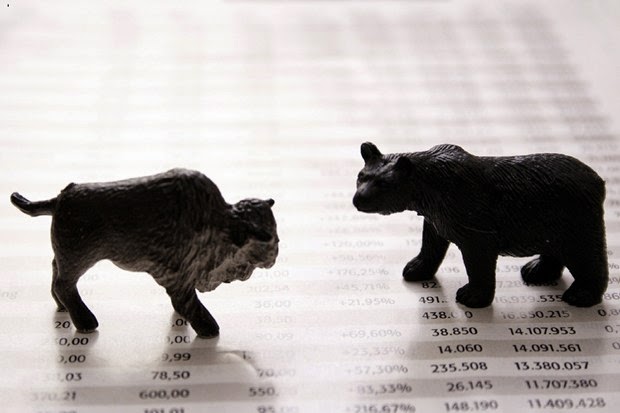
First of all, let's remember that bears are sluggish and bulls spirited and burly. The terms are used to describe general actions and attitudes, or sentiment, either of an individual (bear and bull) or the market. A bear market refers to a decline in prices, usually for a period of a few months, in a single security or asset, group of securities or the securities market as a whole. A bull market is when prices are rising.


The actual origins of these expressions are unclear. Here are two of the most frequent explanations given: 

The terms "bear" and "bull" are thought to derive from the way in which each animal attacks its opponents. That is, a bull will thrust its horns up into the air, while a bear will swipe down. These actions were then related metaphorically to the movement of a market: if the trend was up, it was considered a bull market; if the trend was down, it was a bear market.
 
http://roboticstockstrader.com/ Historically, the middlemen in the sale of bearskins would sell skins they had yet to receive. As such, they would speculate on the future purchase price of these skins from the trappers, hoping they would drop. The trappers would profit from a spread - the difference between the cost price and the selling price. These middlemen became known as "bears", short for bearskin jobbers, and the term stuck for describing a downturn in the market. Conversely, because bears and bulls were widely considered to be opposites due to the once-popular blood sport of bull-and-bear fights, the term bull stands as the opposite of bears.

If you are an active stock trader and facing loss from your stock trading or you are looking for risk free trading system  just use Robotic Stocks Trading System. This is fully robotic trading system which is very helpful for you. For more detailed information just visit our website once.  


Fill This Form To Get More Detailed Information 


The Advantages of Using Automated Trading Systems


1. There is no learning curve, since prior knowledge of the Stock Market is not required. Traders do not need to learn about trading methods or systems in order to trade, they can simply rely on the tested strategies of the automated systems.

2. There is no down time due to the learning process. Traders can start earning from the very first day they adopt automated trading.

3. One can effectively remove emotion and guesswork from trading, making fear and greed no longer an issue.

4. Traders can let professional strategies do the work for them, allowing experts to manage their money.

5. Even if traders have no time to study the market in detail, they are still able to participate in it.

6. One can capitalize on opportunities 24 hours a day: when using automated trading, one doesn’t need to always look for the next trade. Traders can remain calm while the automated system constantly scans the market for opportunities.


7. There are advanced risk management options, since traders can actually build their own personal hedge funds by choosing signal sets they prefer and the number of lots assigned to them.

8. Regardless of whether traders are working at their day jobs or sleeping, they can rest assured that their money is constantly working for them. All they need to do is choose their preferred trading systems.

9. Once a profitable system is developed, all one needs to do is find it. There is a wide selection of automated trading systems from which to choose. At any one time, thousands of traders and programmers are working to create new and better systems; in automated trading, all one has to do is to find and choose the best of them.

10. By freeing up traders’ time, automated trading system allows them to focus on improving their strategies and money management rules.

Fill This Form To Get More Detailed Information

http://roboticstockstrader.com/contact-us/

Technology for your portfolio has made rapid advancements in the past few years. If you are a do-it-yourself investor, low-cost online solutions can help you build a better portfolio. Some of the solutions below also consider taxes and help you locate investments in the appropriate accounts to deliver an outcome that may lower your tax bill.With online investment managers, you will pay the internal expenses of the funds used. With some services listed below you choose your own brokerage account and pay trading fees; with other services trading fees are included in their price or service package. All information below was compiled from each service’s website, and nothing is intended as a recommendation.

JemStep

Jemstep is an online portfolio manager. Their patented methodology determines the appropriate asset allocation for you and evaluates up to 20,000 mutual funds and ETFs to come up with a recommendation. What I like is that their market scenario modeling considers what you might expect in poor and average markets, not bull markets. This is a more appropriate way to test a portfolio; if you get a bull market for your next 20 years you are going to be just fine. What you need to know is how well-off you’ll be if you get a bad 20 years. The software evaluates what you currently own, then recommends changes that can lower your taxes and expenses and provide an improved risk/return tradeoff. They have a free option you can try, and if you like it, portfolio management runs from $17.99 - $69.99 a month, depending on your portfolio size.


Betterment

Betterment is an automated online portfolio manager that can also help recommend how much to contribute to accounts to reach certain goals. You can model the effects of increasing your savings and then set up automatic deposits. They use exchange traded funds (ETFs) along with tax-efficient algorithms to create an optimal asset allocation of stock and bonds that can be easily implemented right there with a click or two. Their pricing ranges from .15 - .35% of portfolio size and they offer a 30 day free trial.


SigFig

SigFig is an online portfolio management software tool that allows you to optimize your portfolio around risk, return, and expenses. They evaluate what you currently own, then recommend a portfolio of diversified ETFs, and you can set it up to automatically rebalance for you. Their process doesn’t appear to be tax sensitive, so this can be a good option if all your money is inside retirement accounts where there are no tax consequences to making investment moves. Their service is free for portfolio sizes under $10,000 and runs only $10 a month for larger portfolios.


FolioInvesting

FolioInvesting is not online portfolio advice; instead it is an online brokerage account that provides over 100 ready-to-go packaged portfolios called Folios. You can buy or sell these Folios much like you would buy or sell a mutual fund and with their unlimited package you can have virtually unlimited commission-free trades for $29 a month. This may be a good alternative for those currently picking their own mutual funds or stocks.  Folio allows you to easily diversify, but you will need to pick the portfolio and tax location of your investments (tax location means what choices are best held inside your IRA vs. in a non-retirement account.)


MarketRiders

MarketRiders is an online portfolio manager that offers something for the self-directed investor, the advanced investor, and for those seeking an advisor. For the do-it-yourself person they use an online questionnaire to recommend a diversified index fund portfolio which you can implement at your choice of numerous online brokers. They then monitor and send you rebalance alerts. They have a minimum recommended portfolio size of $25,000, and their services run $14.95 a month, or $149.95 a year. They offer a 30 day free trial.

Rebalance IRA 

Rebalance IRA focuses on managing your investments with low fees by building a diversified portfolio using low cost index funds, and they will rebalance it on an ongoing basis. Their process starts with a phone interview. Like WealthFront, they list Burton Malkiel and Charley Ellis as part of their team on their advisory board. They recommend you have at least $75,000 in your account, and they charge .50% of your portfolio value. Although their fees are slightly more than some of the other options, the services looks like it offers more personal contact with the phone interview, and that would be reason for a slightly larger price. This service is affiliated with MarketRiders and uses their investment platform, methodology, and rebalancing algorithms.


Robotic Stocks Trader

Robotic Stocks Trader is a fully automated trading system which is very useful in your stock trading. This system will help to increase your trading profit at minimum risk and perform trading on your behalf. You can earn money while doing party with the help of this system.This is the future of Stock Market trading. To get more information about this system just visit our website.

To Get Demo Of This System Just Fill This Form


http://roboticstockstrader.com/
Trading in the stock market can be both fun and of much interest, provided you know how the market works. Many people have been lucky enough to earn millions in the stock market overnight while some have lost fortunes. So, if you want to try your hand at stocks then better take some preparation.

Below are a few tips which would help you to invest in stocks in a sensible manner:

 
 1) Buying and selling of stocks frequently

A major mistake Most of the beginners, trade their securities rather too often. If you buy and sell frequently, then the benefit will be negligible compared to the losses. Being greedy does not pay instocks.

 2) Do not panic 

Stock market is essentially for investors who like to experiment with their money. To win in the long run you should sell only when it yields you proper money. People who are driven by panic are prone to buying high and selling low.

 3) Understanding stock market strategies 

You should be aware of the basic investment strategies before you put your right foot forward. Technical analysis is a strategy that is widely used. Here, charts are used to predict the movement of stocks. It should be noted that this technique works best for short term trade rather than long term investments.

 4) Choose your broker carefully 

Finding out the suitable broker for you can make a difference. You should make sure that your broker has certain qualities. Firstly, the broker should allow you to place trades online. This is important because placing a trade online saves you quite a few bucks compared to doing the same in person. Secondly, don’t hire a broker who charges high fees. More often than not, their advices are not useful. Moreover, if the fees are quite high then it will eat your profits. Finally, if you are a novice then choose a beginner friendly broker. Some brokers are geared more towards veteran investors and their intricate methods may confuse you.

5) Beware of stock market scams   
                      
 Stock market has its share of shady people but if you are careful then you are safe enough. Stay clear of offers which promise more than 50% return. Likewise, a guaranteed return is a doubtful case. Also remember that whenever someone tries too hard to sell you something, his motives are perhaps questionable.

6) Use Robotic Stocks Trader 

Robotic Trading Systems are very helpful to execute a user defined strategy . The Cool Trade system monitors all the stocks via a real time data feed, creates a watch list and do trading according to stock market conditions. 

 Above are few important tips which every new investor should know before getting into the stock market. These tips will help you invest wisely in individual stocks and generate profit.

Register Yourself To Get More Information


Russian lawmakers are working on a draft law to allow the confiscation of property, assets and accounts of European or U.S. companies if sanctions are imposed on Russia over Ukraine, RIA news agency said on Wednesday.

RIA quoted Andrei Klishas, head of the constitutional legislation committee in the upper parliament house, as saying the bill “would offer the president and government opportunities to defend our sovereignty from threats”.

He added that lawyers were examining whether the confiscation of foreign companies’ assets, property and accounts would comply with the Russian constitution but said such steps would “clearly be in line with European standards”.

In this time traders can relay on the best trading system which is Robotic Stock Trading. This is system will help you a lot in this kind of situations and save you from unexpected losses. If you are a n active trader and want to do effective trading then just contact us and know more about this magical trading system. 
  
http://roboticstockstrader.com/
Wall Street is the financial district of New York City. It's the collective name for the financial and investment community, which includes stock exchanges and large banks, brokerages, securities and underwriting firms, and big businesses.

Wall Street is the home of the New York Stock Exchange, the world's largest stock exchange by market capitalization of its listed companies. Several other major exchanges have or had headquarters in the Wall Street area, including NASDAQ, the New York Mercantile Exchange, the New York Board of Trade, and the former American Stock Exchange.


  Some interesting Facts Of Wall Street

  • Wall Street was laid out behind a 12-foot-high wood stockade across lower Manhattan in 1685. The stockade was built to protect the Dutch settlers from British and Native American attacks.
  • The “stock market” began in May 17th, 1792 when 24 stock brokers and merchants signed the Buttonwood Agreement.
  • The buttonwood tree was simply the local name for the sycamore tree.
  • The first stock ticker was invented by Edward A. Calahan in 1867.
  • The Securities Exchange Act of 1934 creates the Securities and Exchange Commission, charged with the responsibility of preventing fraud and to require companies provide full disclosure to investors.
  • Despite the New York Stock Exchange’s notoriety, it was not the first stock exchange in the United States. That distinction belongs to the Philadelphia Stock Exchange, which was founded in 1790.
  • The Massachusetts Investors Trust was the first official mutual fund, created on March 21st, 1924.
  • The Wellington Fund, created in 1928, was the first mutual fund to include stocks and bonds.
  • Wells Fargo Bank established the first index fund in 1971. John Bogle would use it as the basis for building low cost index funds at The Vanguard Group.
  • The first exchange traded fund, or ETF, was SPDR. It was created in 1993 by State Street Global Advisers and tracks the S&P 500 stock index. 
If you are a trader and want to know some more interesting facts related to stock market just stay connected with us. With us you can also know about Robotic Trading Systems these are the future of stock market trading which can help you to earn huge profit from stock market trading.