Showing posts with label Automated Trading System. Show all posts

Canaccord Genuity portfolio strategist Martin Roberge believes another round of stimulus may be required for risky assets to move into a higher trading range.
The most likely source is the European Central Bank, as he noted that deflationary forces are mounting in the euro zone.
While the negative impact of harsh winter conditions has passed, the much-awaited economic rebound in Q2 may not be as strong as anticipated by many investors,” Mr. Roberge said in a research note.

He pointed out that forward-looking indicators suggest a softening of global economic momentum as the OECD LEI diffusion index dipped for a third month in a row to 65%.

Mr. Roberge also noted that momentum is waning in developed markets and balancing out in emerging-market economics, with recent data pointing to stabilization rather than acceleration in Q2.

But the strategist also noted that a move in the euro above US$1.40 appears to be a pre-requisite for the ECB to embark on a stimulus program.

Mr. Roberge suggested another potential catalyst to send stocks higher could be broader monetary reflation in emerging markets.

China has reduced reserve requirements for banks while at the same time putting through stimulus packages aimed at boosting spending on railways and other construction projects.

“Elsewhere, inflationary pressures could be at a tipping point,” the strategist said, adding that Canaccord’s inflation diffusion index for emerging markets is peaking. “A more visible improvement would likely signal the end of the monetary tightening cycle in several countries.”

Automated trading systems, in all its forms, is a rapidly growing trend in the financial markets. The liquidity added by automated trading helps the entire marketplace by making it more efficient for everyone. While we may never know what, if any role, an automated trading snafu played in the May 6th market flash crash, one thing is for certain: automated trading systems has changed the battlefield of electronic trading.  

Fill This Form To Get More Detailed Information


Investors have been wading through a flood of earnings over the last few weeks, but the focus turns back to the Federal Reserve and economic matters on the last day of the month.

The Federal Reserve wraps up a two-day policy meeting and issues a decision on interest rates at 2 p.m. ET. Investors have been monitoring its moves to reign in economic stimulus measures. The Fed is expected to reduce its asset purchases by another $10 billion.

U.S. stock futures were declining in advance of the opening bell.

Employment and economic growth is also on the agenda: ADP will release its monthly national employment report at 8:15 a.m. Then the Bureau of Economic Analysis will release its initial estimate of first quarter U.S. GDP at 8:30 a.m. ET.

Related: Fear & Greed Index

In corporate news, Time Warner (TWC, Fortune 500) and Hyatt Hotels (H) are among the companies reporting earnings before the opening bell. Weight Watchers (WTW) is reporting after the close.

Shares in Royal Dutch Shell (RDSA) are rising by about 4% in London trading after the oil giant reported better-than-expected quarterly results and hiked its dividend.

Takeover talk continues Wednesday, with shares in the French company Alstom (ALSMY) rallying by 8% in Europe after General Electric (GE, Fortune 500) bid $13.5 billion to take over the firm's power divisions. German firm Siemens (SI) may yet make a counter offer.

Shares of Twitter (TWTR) were falling by about 11% in premarket trading after the company posted uninspiring first quarter results.

Related: Five years later, TARP price tag hits $40 billion

U.S. stocks closed higher Tuesday. The Dow Jones industrial average and S&P 500 ended solidly higher, while the Nasdaq finished up 0.72%.

Over the course of April, the Nasdaq has declined by just over 2%. The S&P and Dow have eked out minor gains. 

If you are an active stock trader and facing loss from your stock trading or you are looking for risk free trading system  just use Robotic Stocks Trading System. This is fully robotic trading system which is very helpful for you. For more detailed information just visit our website once.  

FILL THIS FORM TO GET MORE DETAILED INFORMATION


http://roboticstockstrader.com/ 
The stock market slide in recent days, after the S&P 500’s 30%-plus surge last year, doesn’t represent the bursting of a bubble.

That’s crucial to consider, given the comparisons made by some pundits between the current market and that of March 2000, when tech stocks started evaporating.

Whatever else you might say about today’s stock market, it is nowhere near as overheated as it was 14 years ago. And that’s not a subjective view. My conclusion is derived from a data-driven focus on objective measures that were identified by the leading academic study of investor sentiment. That study, by Jeffrey Wurgler and Malcolm Baker, who are finance professors at New York University and Harvard Business School, respectively, was titled “Investor Sentiment in the Stock Market.”

The professors identified five indicators of investor sentiment that, over the past half century, were highly correlated with investors’ mood swings between the extremes of pessimism and exuberance.

Not surprisingly, the indicators showed a record level of investor optimism in March 2000. The picture they’re painting today is far different.

1. Volume of IPOs. There were 123 new issues in the first three months of 2000, according to University of Florida finance professor Jay Ritter. There were 58 in the same period this year, according to Ritter.

2. IPO returns. In 2000’s first quarter, the first-day return of the average initial public offering was an incredible 96%. During the first three months of 2014, it was 22%.

3. Dividend premium. The professors, in a study, focused on the relative valuations of two groups of stocks: those of established, dividend-paying companies versus those of more speculative firms. They theorized that, as exuberance reaches extreme levels, investors become bored by established, dividend-paying companies. In March 2000, speculative companies on average had a 43% higher valuation than the dividend-paying stocks. The comparable premium today for stocks in the S&P 1500 index is 26%, according to data from FactSet.

4. Share turnover. Over the first three months of 2000, NYSE-listed stocks’ turnover rate was an annualized 89%. For the first quarter of this year, it was 58%.

5. Share of corporate cash derived from equity issuance. Corporations increasingly turn to the equity markets to raise money during periods of speculative excess. The equity share stood at 20% for the first three months of 2000. The most recent data from Wurgler, covering three months in late 2013, showed the equity share was 11%.

The bottom line? None of the five sentiment indicators shows the market today to be as overheated as it was in March 2000.

To be sure, equities may be overvalued. And, in any case, the market is more than overdue for a 10% correction. But the bears go too far when they try to advance their argument by claiming that we’re in a bubble that is analogous to the one that occurred in March 2000. 


If you find this post interesting and want to have more knowledge about stock trading stay connected with us at Robotic Stock Trader. Robotic Stock Trader provides the Best Trading System, on which the traders can rely and trade with the minimum risk of facing losses. This is system will help in crucial situations and save you from unexpected losses. Contact us and know more about this magical trading system.
If you have any query related with your stock market trading just fill this form and ask your queries directly with market experts. They will provide you solution for your trading problems.  


http://roboticstockstrader.com/contact-us/

Are you considering about going into stock trading? Do you need to brush up on your skills? Do you need to know where to start and being? Look no further than your own computer. The internet is filled with information, yet only a few websites reigns supreme in educating you. So here are the top 6 best online Stock Market Education Websites (And they are free).

StockTradingToGo.com - Stock Trading to go offers educational articles to read on the best investment books to read, how to do stock trading online, Day Trading tips, and the most important 10 question you need to ask your investment broker before you being, plus so much more. On this site as well you get a handy stock market dictionary guide filled with the entire stock market lingo you may encounter so you are never left in the dark. You also get information on.
  • Best online Stock brokers
  • Personal Finance
  • General investing
  • ETF’s (Exchange Traded Funds)
  • Stock Orders
  • How to Read Stock Charts
WallStreetSurvivior – This is free online stock trading game you can play. What better way to learn except by doing. Here you can take all your stock market know how you have learned and test it in this online virtual world. The stock market world is not for the weak so what better way to test your chops in this fun game. The game also features some contests too for a chance to win real money.

FreeInvestinglessons.com - You get a 8 part in depth video series all about stock trading.
Part 1: You learn about the difference between stocks and shares, and bonds.
Part 2: Will deal in investing.
Part 3: Deals in some knowledge of how stocks are bought and sold and tax information.
Part 4: Talks about where you should invest and how much effort is required on your part once you do.
Part 5: Explains what to do when you purchase a stock and what happens after.
Part 6: Delves in how to read the stock charts so you can follow your stocks.
Part 7: Gives you building your stock portfolio tips, and when to diversify.

Roboticstockstrader.com - This is a best site for stock market traders. Here you can find out the game changing technology which can convert your trading loss into profit. Here you can learn how technology is helpful in trading. These systems are known as Automated Trading Systems this is a game changing technology. If you are a beginner in stock market or a expert trader this will very useful for you all.

Stock Market For Beginners Guide - This is a great site for beginners to learn the ins and outs of stock trading. The choices of topics are in-depth not just an overview. You can read about what stock trading is exactly to learning about what a penny stock is and how to invest in them. There is no order you have to read each section either so this site is good fit for your beginners as well as your mid -level Traders.

Technitrader.com – Quoted to being the best stock trading learning website ever, and it well could be. They offer free personalize lessons which you can customize to fit your needs, whether you need a little or a lot of training. Each course is constructed to your needs and you can take it on your own time, at your own level. This is not a site to just read and learn it’s an actual course, with actual interaction with the teachers.

If you have any query related with your stock market trading just fill this form and ask your queries directly with market experts. They will provide you solution for your trading problems.  


Stock Trading Myths

Many investors wonder whether or not investing in stocks is worth all the hassle. At the same time, however, it's important to keep a realistic view of the stock market. Regardless of the real problems, common myths about the stock market often arise. Here are five of those myths.

1. Investing in Stocks Is Just Like Gambling.

This reasoning causes many people to shy away from the stock market. To understand why investing in stocks is inherently different from gambling, we need to review what it means to buy stocks. A share of common stock is ownership in a company. It entitles the holder to a claim on assets as well as a fraction of the profits that the company generates. Too often, investors think of shares as simply a trading vehicle, and they forget that stock represents the ownership of a company

In the stock market, investors are constantly trying to assess the profit that will be left over for shareholders. This is why stock prices fluctuate. The outlook for business conditions is always changing, and so are the future earnings of a company.


2. The Stock Market Is an Exclusive Club For Brokers and Rich People.

Many market advisors claim to be able to call the markets' every turn. The fact is that almost every study done on this topic has proven that these claims are false. Most market prognosticators are notoriously inaccurate; furthermore, the advent of the internet has made the market much more open to the public than ever before. All the data and research tools previously available only to brokerages are now there for individuals to use.


3. Fallen Angels Will Go Back up, Eventually.

Whatever the reason for this myth's appeal, nothing is more destructive to amateur investors than thinking that a stock trading near a 52-week low is a good buy. Think of this in terms of the old Wall Street adage, "Those who try to catch a falling knife only get hurt."

4. Stocks That Go up Must Come Down.


The laws of physics do not apply in the stock market. There's no gravitational force to pull stocks back to even. Over 20 years ago, Berkshire Hathaway's stock price went from $7,455 to $17,250 per share in a little more than five year. Had you thought that this stock was going to return to its lower initial position, you would have missed out on the subsequent rise to $170,000 per share over the years.

The stock price is a reflection of the company. If you find a great firm run by excellent managers, there is no reason the stock won't keep on going up.

5. A Little Knowledge Is Better Than None


Knowing something is generally better than nothing, but it is crucial in the stock market that individual investors have a clear understanding of what they are doing with their money. Investors who really do their homework are the ones that succeed. Don't forget, if you don't have the time to fully understand what to do with your money, then having an advisor is not a bad thing. The cost of investing in something that you do not fully understand far outweighs the cost of using an investment advisor.

The Bottom Line


Forgive us for ending with more investing clichés, but there's another old adage worth repeating: "What's obvious is obviously wrong." This means that knowing a little bit will only have you following the crowd like a lemming. Like anything worth anything, successful investing takes hard work and effort. Think of a partially informed investor as a partially informed surgeon; the mistakes could be severely injurious to your financial health.

In this kind of situation traders can relay on the best trading system which is Robotic Stock Trading. This is system will help you a lot in this kind of situations and save you from unexpected losses. If you are a n active trader and want to do effective trading then just contact us and know more about this magical trading system.


Fill This Form To Get More Detailed Information


Automated Trading System
A new study provides perhaps the strongest evidence to date that certain human-capital metrics can predict a company’s performance in the stock markets.

The research was nothing if not robust. Through extensive use of regression analysis, it tested the relationships between a set of human-capital metrics and stock-price movements at 22,100 companies over a 16-year period, 1996 through 2011.

A key finding of the study – performed by Jeff Higgins, CEO of the Human Capital Management Institute, and Pepperdine University professor Donald Atwater – may surprise investors, stock analysts and finance executives themselves.

Generally speaking, a company’s net income and to a lesser extent revenue are considered the gold standards for shaping expectations of its stock’s future performance. But the research found net income per full-time-equivalent employee (FTE) and net revenue per FTE – both commonly used financial metrics – to be the poorest predictors among the studied human-capital metrics. In fact, both are statistically insignificant, as is pure net profit without association with any human-capital metrics.

Instead, two metrics used by some human-capital analysts, but few other people, are powerful predictors of stock price, the research found. One, called “Return on Human Capital Investment” (Return on HCI), compares “Total Cost of Workforce” (TCOW) to net operating profit. (TCOW includes: all direct and indirect cash or equity compensation for employees and contingent workers; paid employee benefits, perks and rewards; retirement-related costs for both current and former employees; and costs for worker training, recruiting, employee relations, and severance and legal settlements.)

The other highly predictive metric is “Human Capital ROI Ratio.” It measures the ratio of return on revenue (net of non-workforce expenses) to TCOW. For example, say a company has $1 billion in revenue and $800 million in total expenses, $500 million of which are people costs. To arrive at HC ROI ratio, subtract the $300 million nonpeople costs from revenue, leaving $700 million, and divide that by the $500 million in people costs.

In essence, the two metrics are different ways of measuring the percentage return on $1 invested in the work force, assuming all other factors remain constant. In the above example for Human Capital ROI Ratio, the result is expressed as 1.40, or a 40-cents positive return on the invested dollar.

Less predictive than those two metrics, but still statistically significant, are TCOW as a percentage of operating expenses and as a percentage of revenue.

“Everyone thinks net profit drives stock price,” says Higgins, a former CFO, “and in my old finance world I thought so too. But what really drives stock price is productivity. Some might say Return on HCI and Human Capital ROI Ratio are synthetic profit metrics, but we see them as productivity metrics – the return on people’s productivity. And when those numbers improve, your stock price jumps.”

If you find this post interesting and want to have more knowledge about stock trading stay connected with us at Robotic Stock Trader. Robotic Stock Trader provides the Best Trading System, on which the traders can rely and trade with the minimum risk of facing losses. This is system will help in crucial situations and save you from unexpected losses. If you are a n active trader and want to do effective trading then just contact us and know more about this magical trading system.

Fill This Form To Get More Detailed Information


For every Forex strategy you will encounter, numerous five pros who will tell you their strategy is better. Explained that, usually there are some rules of thumb when trading Forex and ordering is to leave your emotions out. However, how is the next step that while? One of the most effective way to trade absolutely no emotion is by employing automated trading software for your trading.

The System is full of conversations and interviews with the most successful traders and investors in earth. If you are a short-term trader, this system can be rather helpful, as it is often filled with tips which focus on smart trading of stocks. These interviews have also shared their personal views along the current facets of trading.

Automated Trading Systems and signals are available to purchase over the internet. However, it is important to note that there is no such thing as the "holy grail" of trading systems. If the system was a perfect money maker, the seller would not want to share it. This is why big financial firms keep their "black box" trading programs under lock and key. 

There are many trading strategies available in the market; some needs money and some for entirely.  Sometimes, the general significantly had traders can locate themselves fascinated to the purpose of distraction this trading past experiences. It might be that they actually wish just jump into an investment theme which will come together at about a susceptible moment, or that solely would like to trade 1 time. What type more the wherewithal might be disaster.

Fill This Form To Get More Detailed Information


The FTSE 100 is called to open lower this morning following the economic news out overnight from China with the flash HSBC manufacturing PMI coming in below forecast at 48.1 and the ongoing situation in the Ukraine. The economic diary now focuses on flash US manufacturing PMI due out this afternoon. Commodity prices are flat to lower and on the foreign exchanges, the pound is slightly higher against both the dollar and the euro but all are within narrow trading ranges. We start the week on a quiet note for major corporate news.


Company Announcements

Standard Life

It has confirmed press comment with the acknowledgement that it is in exclusive and advanced discussions with Phoenix Group regarding the potential acquisition of Ignis Asset Management. It added that the talks are ongoing and there was no certainty that a transaction will be agreed with it making further announcements if and when appropriate.

Kentz

Full Year Results from the engineering and construction company see PBT up 12.6% at USD118m on revenue ahead 6% at USD1.66bn. The total dividend is raised 21% to 17.5 cents. It noted that its backlog increased to USD4.1bn at the end of February 2014 with the acquisition of Valerus Field Solutions completed at the end of January and its transition into Kentz exceeding expectations. It added that its pipeline of new business opportunities was up 18% to USD15.6bn and forecast that 2014 performance will be ahead of its previous expectations with all its three business units expected to perform strongly.

If you want to know some more interesting facts related to stock market just stay connected with us. You can also know about Robotic Trading Systems, these are the future of stock market trading which can help you to earn huge profit from stock market trading.
Fill This Form To Get More Detailed Information 


http://roboticstockstrader.com/
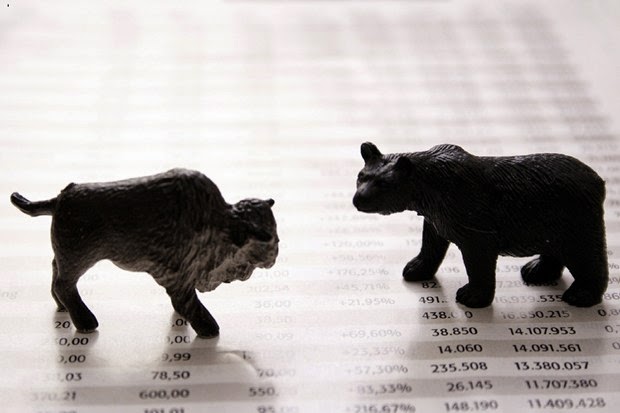
First of all, let's remember that bears are sluggish and bulls spirited and burly. The terms are used to describe general actions and attitudes, or sentiment, either of an individual (bear and bull) or the market. A bear market refers to a decline in prices, usually for a period of a few months, in a single security or asset, group of securities or the securities market as a whole. A bull market is when prices are rising.


The actual origins of these expressions are unclear. Here are two of the most frequent explanations given: 

The terms "bear" and "bull" are thought to derive from the way in which each animal attacks its opponents. That is, a bull will thrust its horns up into the air, while a bear will swipe down. These actions were then related metaphorically to the movement of a market: if the trend was up, it was considered a bull market; if the trend was down, it was a bear market.
 
http://roboticstockstrader.com/ Historically, the middlemen in the sale of bearskins would sell skins they had yet to receive. As such, they would speculate on the future purchase price of these skins from the trappers, hoping they would drop. The trappers would profit from a spread - the difference between the cost price and the selling price. These middlemen became known as "bears", short for bearskin jobbers, and the term stuck for describing a downturn in the market. Conversely, because bears and bulls were widely considered to be opposites due to the once-popular blood sport of bull-and-bear fights, the term bull stands as the opposite of bears.

If you are an active stock trader and facing loss from your stock trading or you are looking for risk free trading system  just use Robotic Stocks Trading System. This is fully robotic trading system which is very helpful for you. For more detailed information just visit our website once.  


Fill This Form To Get More Detailed Information 


The Advantages of Using Automated Trading Systems


1. There is no learning curve, since prior knowledge of the Stock Market is not required. Traders do not need to learn about trading methods or systems in order to trade, they can simply rely on the tested strategies of the automated systems.

2. There is no down time due to the learning process. Traders can start earning from the very first day they adopt automated trading.

3. One can effectively remove emotion and guesswork from trading, making fear and greed no longer an issue.

4. Traders can let professional strategies do the work for them, allowing experts to manage their money.

5. Even if traders have no time to study the market in detail, they are still able to participate in it.

6. One can capitalize on opportunities 24 hours a day: when using automated trading, one doesn’t need to always look for the next trade. Traders can remain calm while the automated system constantly scans the market for opportunities.


7. There are advanced risk management options, since traders can actually build their own personal hedge funds by choosing signal sets they prefer and the number of lots assigned to them.

8. Regardless of whether traders are working at their day jobs or sleeping, they can rest assured that their money is constantly working for them. All they need to do is choose their preferred trading systems.

9. Once a profitable system is developed, all one needs to do is find it. There is a wide selection of automated trading systems from which to choose. At any one time, thousands of traders and programmers are working to create new and better systems; in automated trading, all one has to do is to find and choose the best of them.

10. By freeing up traders’ time, automated trading system allows them to focus on improving their strategies and money management rules.

Fill This Form To Get More Detailed Information